

- cross-posted to:
- world@lemmy.world
…
The reforms could reshape an industry worth around EUR 17.5 billion, much of which expanded under the previous government through generous state incentives and a business-friendly regulatory environment.
…
Prime Minister Péter Magyar announced on Friday that Hungary will introduce what he described as the strictest environmental regulations in the European Union, while also increasing financial burdens on polluting companies and abolishing generous tax incentives previously offered to multinational corporations. The measures form part of a broader reform of Hungary’s corporate tax system.
Bloomberg noted that the changes are likely to have the greatest impact on Chinese manufacturers, many of which chose Hungary as their gateway to the European Union and established some of their largest European battery production facilities in the country, including BYD’s first EU manufacturing plant.
…
Environmental concerns become a political priority
The government’s tougher stance follows growing public concern over the environmental impact of battery manufacturing. According to Bloomberg, dissatisfaction with large-scale battery investments and fears over soil, air and water pollution contributed to Magyar’s landslide election victory in April, reflecting widespread criticism of what many saw as the previous administration’s lenient enforcement of environmental regulations.
Transport Minister Dávid Vitézy stressed that the new government would adopt a zero-tolerance approach to environmental violations. “There will be no compromises and no flexibility in enforcing these rules,” he said, adding that the government would not overlook environmental breaches in favour of Chinese industrial interests.
…
Battery manufacturers from China face increasing scrutiny
The policy shift is already becoming visible through regulatory action against several major investors from China. Last month, Hungarian authorities suspended the operations of Semcorp, a Chinese manufacturer of separator films used in lithium-ion batteries, after groundwater contamination was detected beneath its factory in the industrial park of Debrecen.
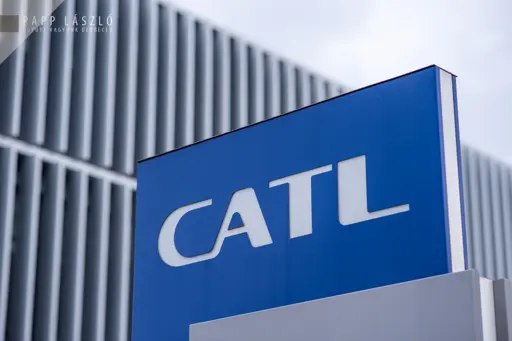
Semcorp operates next to CATL, which is currently constructing an EUR 7.2 billion battery plant—the largest single investment in Hungarian history. Authorities have also launched an investigation into CATL after green-coloured liquid was reportedly observed near the construction site in May.
At the same time, police opened an investigation into BYD over allegations that contaminated soil classified as hazardous waste had been illegally removed from its construction site in Szeged. A senior official at the Ministry of Environmental Protection described the alleged incident as a serious environmental violation. BYD has denied the accusations.
…
China’s business community has already begun to take note of Hungary’s tougher regulatory approach. One investment consultant reportedly cancelled a planned investment tour of Hungary after the mayor of Debrecen publicly called on polluting companies to leave the city.
…
Despite the tougher regulatory climate, the government believes Hungary’s appeal to international manufacturers extends beyond the incentives offered by previous administrations. Bloomberg noted that the country possesses one of Europe’s strongest automotive manufacturing ecosystems, with major production facilities operated by BMW, Mercedes-Benz, Volkswagen and Suzuki.
…