
Being emotionally detached from really stupid leadership decisions is harder than it seems
Took me a lot of years to not think it’s my company that is being run into the ground. I should not - and nowadays could not - care any less.
The book The Responsibility Virus helped me a lot with this. Most people are over-responsible for the choices of others, specifically ones they can’t reasonably influence, anyway.
I found out that https://www.ribbonfarm.com/2009/10/07/the-gervais-principle-or-the-office-according-to-the-office/ explains a lot of the dysfunctions that one finds in an office / corporate environment.
I stopped giving a shit a long time ago. I do my best to consult and warn and if they don’t listen it’s not my problem.
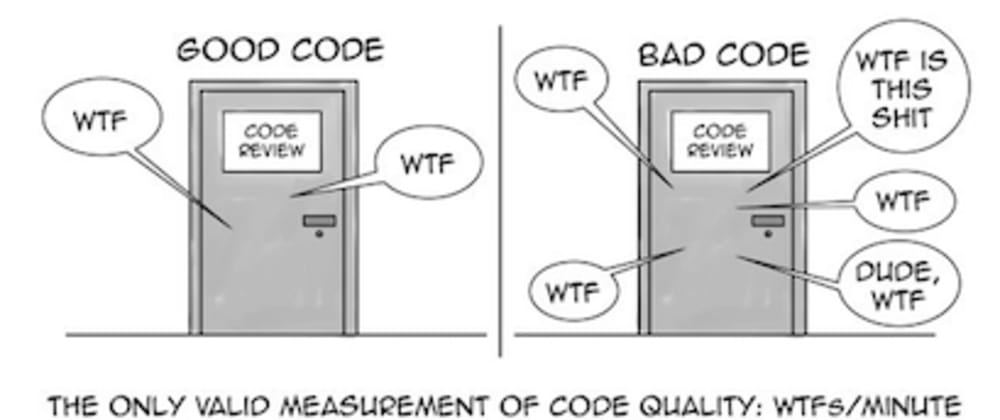
I’m determined to ever only work in public, state-owned companies. I believe in a causal connection between being a private, profit-oriented business and the daily “wtf” moments, the only true measure of quality.
Edit: fixed the link.
The company doesn’t care about you. The company doesn’t care about you. The company doesn’t care about you.
My uncle spent years preaching to me about the need to be loyal to a company. I never drank the Kool-Aid. He spent 21 years working for an investment banking company in their IT department. 4 years before he was set to retire with a full pension, etc. his company was acquired by a larger bank. He lost everything except his 401k. He then spent the next 12 years working to get his time back so he’d be able to retire. He died 2 years ago and the company sent a bouquet of flowers.
THE COMPANY DOESN’T CARE ABOUT YOU!!
Not even if you do valuable or efficent stuff for the company. You’re disposable.
also you might not be replaceable but your manager might be an idiot
The company is always on the lookout for ways to replace you with somebody who will do more for less.
And in the meantime, they will squeeze you for every drop of effort they think they can get away with.
Or less for less. I know a woman who is a manager of a dialysis clinic, as soon as she was making over 100k she started getting pushback from higher ups, having more oversight, and having her funds for extra services to patients / staff cut. It’s clear they want her out even though she has the lowest mortality in the region, because they don’t need more than beds filled (Medicaid pays) and legally required minimums to be met.
The company cares about you in the same way a beef farmer cares about his cattle.
No, they don’t care that much
They refer to you as … HUMAN RESOURCES
You aren’t a person, you are an instrument the company uses to make more money for itself. If you die or can no longer work, you will be replaced by another human resource.
I had a prof twisting himself into knots trying to argue that human resources really is a positive term because companies care about and maintain their resources
The most important traits for doing well at work (in this order):
- clear, effective, and efficient communication
- taking ownership of problems
- having your boss and team members like you on a personal level
- competence at your tasks
I’m halfway through scrolling this long thread, and this is the first comment I’ve seen that isn’t overly cynical. It’s also correct.
I’ve been working for 38 years, and I’ve been someone who makes promotion decisions for 15 of them. The third one is helpful, not essential, but the others are super important. The people who rise to leadership positions aren’t necessarily the top technical people, they’re the ones who do those things with a good attitude.
The other thing I’d add is that they’re people who are able to see the big picture and how the details relate to it, which is part of strategic thinking.
I was taught that my job is “to make sure all my bosses surprises are pleasant ones”. 15 years of working as an engineer and that never changed. Now I have my own business and that’s the thing I look for employees… someone I can leave on their own to do a job. It they have problems they can always ask me. If they screw up I expect them to tell me immediately and to have a plan of action to fix it and to prevent it happening again. And I never ever get cross if someone does come to me and say they screwed up. Far better that we tell the client about a problem than wait until the client finds the problem themselves.
Reading all these comments makes me realize how lucky I’ve been in my career. I’ve always had great bosses who defended me and backed me up.
I’m not sure if the competence is really in the last place. I’d say it’s on the equal level. Great communication and ownership of the problems means little if you can’t really solve the problems.
People have those things in spectrums, not all or nothing. You have to have at least some of all of them, but I’d argue that mediocre competency with really good communication and accountability is a better combination that really good competency with one of the others being mediocre.
I still kinda disagree. We’re talking here about engineering role after all. I have a colleague who is a code wizard, but has kinda problem with (under)communicating. He’s still widely respected as a very good engineer, people know his communication style and adapt to it.
But if you’re a mediocre problem solver, you can’t really make up for it with communication skills. That kinda moves you into non-engineering role like PO, SM or perhaps support engineer.
But I would say this - once you reach a certain high level of competence, then the communication skills, leadership, ownership can become the real differentiating factors. But you can’t really get there without the high level of competence first.
Your employer does not care about you. You are not important or irreplaceable
Take your time and energy and put it into your life, not their business
I have had coworkers die (not work related) and by the time you hear about it (like the next day) they have already worked out who will get the work done so the machine doesn’t have to stop
I had a workmate develop a chronic illness after an infection of COVID, and he had to leave under hardship. People that hung out with him as best mates for years stopped talking to him in a matter of days.
Did you? 🥺
I sent him
a few3 message to see how he was doing. NGL we weren’t super tight before COVID, we never hung out outside of work, and people not masking around me really drove a wedge between us. I’m trying hard not to justify what happened, but who knows maybe I am a little bit.
I don’t think taking action to fill a hole is indicative of not caring.
True but there’s also absolutely no reason to think they care. Even if someone dies. Because they really don’t. So it feels extra soulless when they send out the email redistributing tasks right after the generic condolences email that goes out to the whole floor
I’m all for filling holes!
HR protect the company first, the employees second.
Just remember what hr stands for. You are a resource. No more than a stapler, that can be replaced at any time
Well, sure. Unless you’re talking about a red Swingline. I can’t compete with that.
100%. The rebranding of some HR departments as “People Officers” or “People Team” drives me bonkers. When push comes to shove, they will always protect the interests of the business before the interests of the employee. Full stop.
You are right, but to be fair. “Human Ressources” was an awful name to begin with.
Yeah, neither is great. Needs to be called something like “Employee Business Relations” maybe?
There is no ideal place to work where they “do it right”, whatever kind of “right” you care about right now. When you change jobs, you merely exchange one set of problems for another.
Having worked 7 different jobs that all were in the same field made me have some backbone of standards that nobody else could have built without going through that, though. It’s a blessing and a curse, so be warned. The things I picked up on that I never realized I would care so much about in the healthcare field is good office administration and Director of Care leadership. The morale is just as important as the pay rate.
i worked at all the pizza chains delivering ---- the absolute shittiest ones were a nightmare, for the same 3 reasons:
-
not letting employees make food themselves. it’s a restaurant, you have abundant food, it’s cheap, we all know it’s cheap, we work long shifts, come on. the cobbler’s son should have good shoes.
-
overemphasis on dress code – if you genuinely give a shit if the pizza guy has his hat backwards, you should literally be sent to the gulags.
-
being overworked for low pay, especially being made to drive when exhausted [literally dangerous and life threatening!!]
-
The longer you work anywhere – and I mean ANYWHERE – the more you see the bullshit and corruption and crappy rules or policies and inequality all over.
For me it has been about the 3 year mark anywhere I’ve worked: once you get past that, you fade away from “damn I’m glad to have a job and be making money!” and towards “this is absolute bulls#!t that [boss] did [thing] and hurt the workers in the process!” or similarThanks, I agree!
Today businesses increase like mushrooms after rain, and decrease like mushrooms before summer.
Don’t get attached, move on to the next better mushroom 🍄
Funny, that’s actually what motivated me at my last job. Things were fucked up, but not so fucked up that it was overwhelming. It was the Goldilocks zone of just fucked up enough that I think I can not only fix it, but look good if I do. It was a fun journey, all told, but there were definitely frustrations, even ones that lasted years.
3 years? What nirvana corp do you work at?
Sometimes it’s better if your employer doesn’t know everything you can do. If you’re not careful you’ll end up Inventory Controller/shipper/IT services/reception/Safety officer, and you’ll only ever be paid for whatever your initial position was.
I wanted to be a system engineer, I got hired as a devops, I started doing a bit of system engineer, called hr and said that I’m working on infrastructure and I need my title changed or else I won’t be able to continue my work, my title was changed, no I do system engineer stuff and less of devops, this was a very rare occasion but it can happen from time to time.
People in your workplace don’t know shit. There are a few who know stuff but the majority is dumb, careless or the combination of the two. Surprisingly the higher you go the more dumb and careless there are. We are designing monster billion dollar construction projects and some of my colleagues have problems with understanding written english. Others cannot learn a software that has literally 3 buttons in them they have to press. I don’t even know sometimes why I am trying.
I’m now a scrum master in a government IT team. I asked my team - all new to the work - to do hands on practice of the new systems, try a first stab at building our changes. Our changes were done in the second sprint (a sprint is two weeks of work)
Another team with probably weaker leadership, and maybe fewer competent workers spent six sprints (12 weeks!) “learning” and is unlikely to finish their work before Christmas
Management think my team’s great, but I think we’re mediocre, just tall among dwarfs
A lot of truth in this thread, albeit too cynical for my taste. Yes, the company as soulless, emotionless entity doesn’t care for you. However, your coworkers might, even your boss.
Also, my main take away:
- make sure you know your worth
- make sure the right people know your worth
- make sure the right people know that you know your worth
There’s no such thing as quiet quitting. I prefer acting your wage.
Explanation please? Not a native speaker here…
There was a phenomenon in the US labor market during 2022/2023 called “quiet quitting” where laborers across the market realized that companies weren’t paying wages adequately or to a level that reflected the kind of work laborers would perform.
It was thought that companies paid their workers short of what the workers are owed, and in response to that, a large number of people, many trending young, started behaving according to those wages.
This often meant reducing work speed or efficiency, reducing communication, etc. Laborers would claim that they were doing the bare minimum to match their wage compensation.
The other side of this is that the US labor market at that time favored laborers over companies. Workers had more leverage about getting job offers and negotiating terms than companies had, partly due to a rebound from COVID.
This meant that there wasn’t as much of an anxiety of workers being fired from their position since they would find it easy to get another job. So people did look for other jobs, often while working, to see if they might improve their circumstances and land a job that pays better.
The “quiet” part was about sliding back on performance or even job tasks themselves, and the “quitting” part was about workers possibly leaving companies for other offers.
I might have conflated The Great Resignation with this, but both phenomena affect the other.
Hold on dearly to any leverage you might have over your employer
Your employer is ALWAYS looking for a way to either get more work out of you for the same compensation, or replace you with some one or some process that produces the equivalent output for less cost. The entire idea that employees should be loyal to their employers is one of the most successful propaganda campaigns ever spawned by capitalism.
No matter how much you invest you’re time and effort for your job: You are expendable, and the only people who will know you were absent from home because of work 20 years later, will be your kids.
Yeah, looking busy is way more important than being productive a lot of the time. You always need to be doing something, so you just go through the motions of doing things because otherwise you’ll get shit from your employers. Waiting in good faith for more real tasks to emerge isn’t enough, so you must invent chores.
At least, that was very consistently my experience in retail.