My wife was trying to clean our kettle
I said, it needs CLR
she asked what CLR is
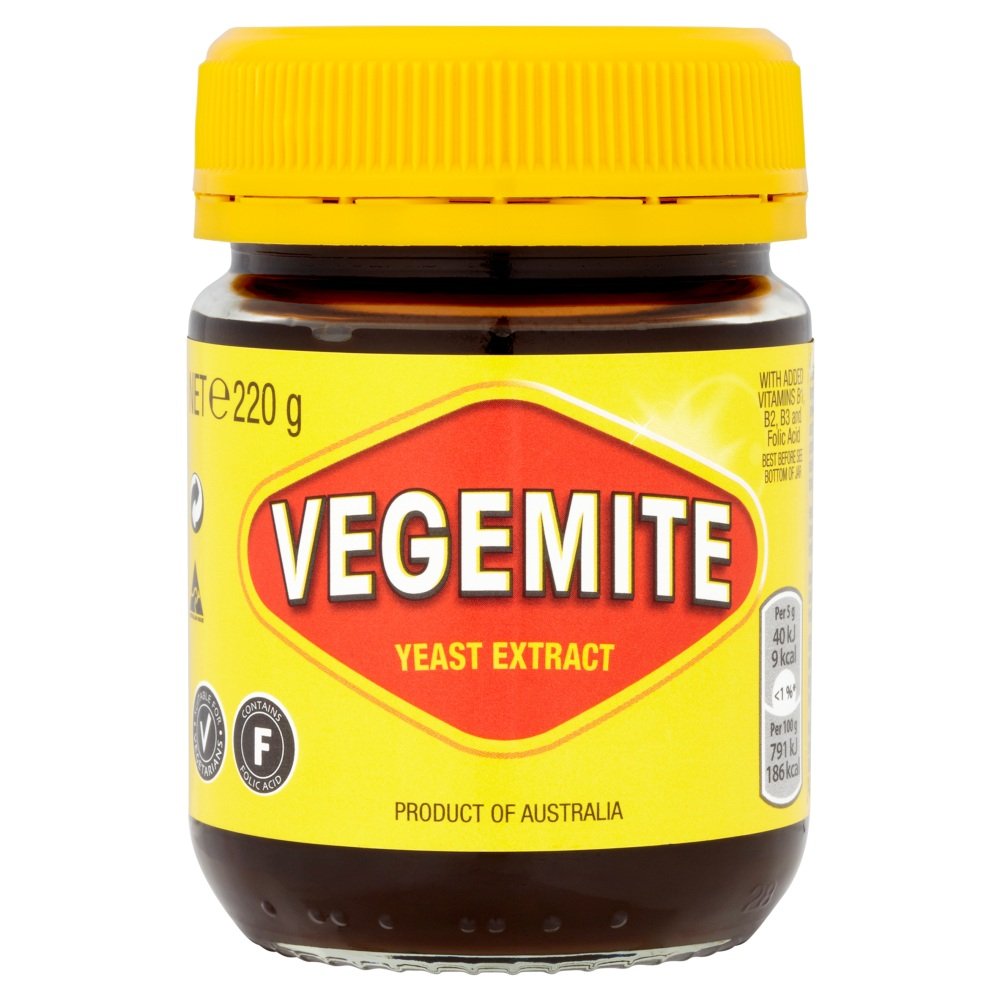
I said Calcium Lime and Rust. There is also Lime-Away.
She put the CLR in there. Then she washed it out many times. All of the mineral deposits washed away. She rinsed it out with water many more times, and then eventually cleaned it with vinegar after rinsing it many times. At least, I think that’s how she cleaned it. She’s the kettle cleaner, I don’t know much about it, other than that CLR exists.
It was very clean for a few months.
We got a regular kettle after that
You must log in or # to comment.
I only use reverse osmosis filtered water in mine, no deposits!
Can also help to pour out the remaining water instead of letting it evaporate.
If you don’t like the smell of vinegar: A 5kg bucket of food-grade citric acid powder costs 20€ and will last you a lifetime. I literally bought mine when I was an apprentice over 20 years ago in my first one room apartment. It has moved nine times with me, it is half empty by now so when predictions are correct, I’ll have to get another one for retirement.
Fill the kettle, add a teaspoon of citric acid, boil for a second and let it sit. You’ll see small bubbles rising where the limestone deposits are being dissolved. That fizzing is carbon dioxide escaping: limescale is mostly calcium carbonate (CaCO₃), and the citric acid attacks it, breaking the carbonate apart. The calcium gets bound up by the citrate into calcium citrate, which washes away, while the carbonate leaves as CO₂ (the bubbles) and water.
Roughly, the reaction looks like this:
3 CaCO₃ + 2 C₆H₈O₇ → Ca₃(C₆H₅O₇)₂ + 3 CO₂↑ + 3 H₂O
Citric acid is a weak acid, so it happily eats through chalky scale but simply doesn’t react with stainless steel, glass, or plastic, whatever the dose. The one teaspoon rule isn’t about protecting the kettle, it’s just about not wasting powder and not having to rinse forever. Use more and it works faster and fizzes harder.
The one exception is bare aluminium: citric acid can dull or lightly etch it, so don’t use this on an old aluminium kettle or pot.
Once the bubbling stops, the reaction is done: everything that could dissolve has dissolved. Pour it out, give it a quick rinse or the next coffee will have a sour note, and the kettle’s clean, no vinegar smell.
EDIT, because I only now read OPs post properly: I’ve only used this on electric kettles - I wouldn’t even know any other ones, I mean, unless you count the ones you put on a burner at a festival or something like that. Those never saw enough sustained use to build up limestone for me.
If you want a cleaning acid, barkeeper’s friend or oxalic acid is generally great, but you do need to be more careful about what surfaces you use on. It will destroy nonstick coatings.
So glad I live in a soft-water area. Weirdly, the local supermarkets still sell limescale removal products. No idea who’s buying them.
Blogs and influencers telling you to use them without providing context about why you’d use them.
People following those blogs and influencers without asking the same questions.
Every comment thread on TikTok is people loudly arguing about things like that and later they potentially realize not everything is the same in every place.
Sigh.
Citric acid.
Drop a teaspoon of citric acid into a full kettle, boil it, empty it, rinse it out, repeat if needed. That blasts away the build up. It is how high end kettles like Fellow stag recommends cleaning their kettle too because you can’t scrub its mirror finish hotplate.
Citric acid is handy for so many things! Cleaning out kettles, coffee makers. We also use it for dishwasher rinse aid and fabric softener in the laundry.
CLR is mostly Lactic Acid.
Any weak acid will remove calcium deposits like lactic, citric, or acetic acid.
My wife didn’t know about CLR.
I just add a tiny pinch when using it, so it acts as a chelating agent to prevent water spots from forming in the first place.
This one. Same for dishwashers and washing machines (adjust dose)
I just boil a tablespoon or two of vinegar. Unless you let it get totally out of control any weak acid will work instantly, it’s food safe, and I already have vinegar in my pantry. Rinse twice or your next coffee/tea may taste off.
Tbh doesn’t sound that hard, unless I’m missing something in the description.
What would make the stove-top kettle easier to descale?
It’s all smooth in there. There aren’t a bunch of grooves and components in there.
You do know there are electric kettles available that are smooth inside? I wouldn’t buy the kind with an open heating element and plastic on the inside. Instead, get one with stainless steel inside.
Those are more expensive.
They’re also safer than stove top with the auto shutoff. You can get them at thrift stores pretty cheap.
No, most cheap ones are the metal kind with exposed components, not the glass kind with the metal bottom.
The kind I mean has a detachable platform, and a very simple kettle interior. They are very cheap. No glass to be found.

That’s what they look like! There’s a big wire inside!
I just use vinegar
Used to do this and stink up the room, then discovered citric acid powder. 1tbps in 2 cups of water. Boil in it the kettle.
RiseRinse repeat once. Then fill it up with regular water and boil again.No smell. And a clean kettle.
What is “rise repeat”?
Sorry that was a typo
Ok
English isn’t my first language, so I was confused 😄
Rinse and repeat.
Vinegar will damage rubber seals. Citric acid will not.
She put vinegar in there for maintenance cleaning.
Cocking vinegar or concentrate?
Also, heated or room temperature? For how long?
so vinegar alone was not cutting it. works for me usually but our water is not that hard.
It tastes like pipes
Half n half, vinegar and water. Fill the kettle halfway with this solution and turn it on. It’ll boil, limescale disappears and you can boil a second, water only cycle to get rid of any lingering vinegar taste, or wash with soap as normal.
Regular kettles will also pick up limescale and minerals after boiling water repeatedly. I’ve not found this to be unique to an electric kettle.
It’s unique in that it’s harder to clean. Yes the smooth ones do also build up minerals.
Ah, didn’t realize it’s the kind that has the element exposed. Those aren’t common where I am. The cheap kettle I have uses a hot plate instead so I forgot about the other variety. Don’t blame you for going back to the stovetop one then
The stovetop ones are more common. They’re usually made of ceramic or metal, sometimes glass or cast iron. I had a glass one I really loved, but it shattered. I replaced it three times before I gave up. Metal it is.
Do you happen to live somewhere gas stoves are more common? I live in Canada, where electric stovetops are more common, so stovetop kettles aren’t the norm. Just curious
Nope
Well actually I don’t know
Damn, you must have some really hard water. I’ve never really felt the need to clean out any of my kettles.
Not sure where OP lives, but I’m in the UK and have to descale my kettle at least twice a year.
According to the internet, my area is around 297ppm.
Never heard of CLR, but we get descaling sachets from the supermarket - I assume it’s similar? Either way, they’re dirt cheap and quick to do, so it’s not really an issue.
Have 50 ppm in my city, Gothenburg, Sweden. It wasn’t until I was an adult that I learned about descaling etc. because it’s just never (or very rarely) needed here.
I learned about CLR because of a similar product, called Lime-Away
“Lime, Calcium and Rust, Lime-away is a must!”
So when I went to the store to find Lime-away, I saw CLR, which is titled just like the Lime-away commercial, and I just used that instead. I don’t know if I’ve ever even tried Lime-away.
Then, years later, I met my wife.
Yeah, I guess so. It builds up on the shower head too, and we have to use a filtration pitcher.
What’s a “regular” kettle?
you know, it’s got a lil spout, you put it on the stove.
Why would you think that would be easier to clean? The water will still partially evaporate, and the mineral contents will also be the same.
Granted, maybe you got a kettle that is really hard to look into, which would “solve” the cleaning problem.
Right, I’ve heard of that. Never seen one in my life.
I second the citric acid tip, it dissolves the limescale really well, no scrubbing needed. How do you clean the stovetop kettle?
You don’t really need to clean it the same way. With the stovetop kettle, you can just use soap and water every time, maybe a little bit of vinegar. It’s all smooth inside, you see.
Ha, you funny little third world people with your weak and feeble electrical supply.
I don’t know why you don’t just make a kettle with two plugs.
I presume stove top
I pound it out with an air needle scaler, but I’m a barbarian.
Like others have said, all it takes is a weak acid. I use white vinegar because it’s cheap and I already have it on hand, but lemon/lime juice or whatever will do in a pinch too.
I have really hard water at my work and all I ever need to clean my kettle is white vinegar and time. If it’s not to bad, I use a splash of vinegar (a tablespoon or several) and enough water to cover the buildup and be swirlable. Then just let it sit and work for 20 minute to an hour. Rinse well and you’re done.
If I’m impatient and want to speed it up (or just want to feel like I’m contributing effort), I’ll warm it up a little, swirl it around it every so often, or give it a light brushing from time to time to dislodge any loose crusties.
If the buildup is bad, you don’t really need to dilute the vinegar. If there’s still residue after an hour or two, you can dump it if you like. and rinse out any loosened buildup, and refresh the vinegar. Repeat as needed.
Nobody uses baking powder/soda? It’s how I used to clean my black tea thermos: baking powder, hot water on top (might foam iirc), let it stand for a few hours. Repeat if required.
Mixed with vinegar it’s even more potent.
BTW, CLR is the name of the prodcut, not its ingredients, which are a mix of acids.
Mixing soda and vinegar for cleaning is counterproductive. Use one after the other.
I wouldn’t imagine baking powder/soda would be terribly effective to dissolve calcium buildup in a kettle. I suppose it could work like a water softener exchanging calcium/sodium ions over time…
I haven’t thought to use baking soda for tea stain because it is so mild a base, but it just might work! I’ll have to give that and washing soda a try. I usually use oxiclean or denture cleanser.
Yes, there is also Lime-Away, which is a similar product. It stands for Lime, Calcium and Rust.