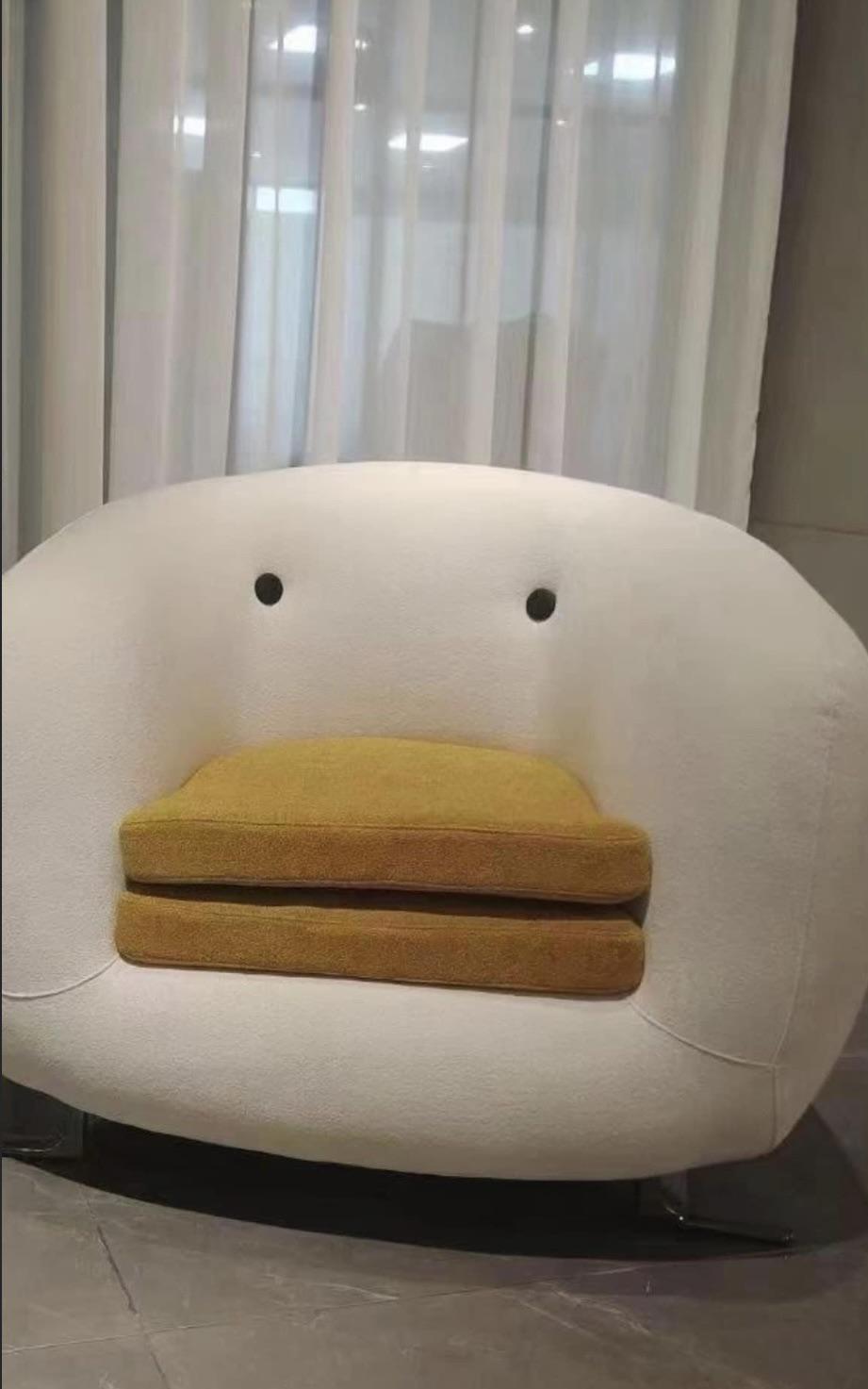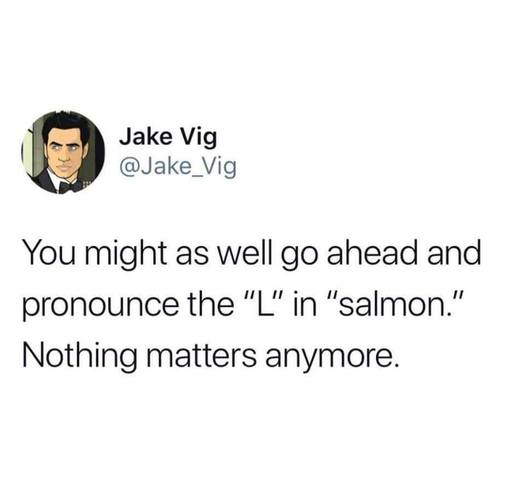

… You were supposed to the whole time …
Nothing ever mattered? D:
My wife and I have been on board for decades :)
Next you’ll be telling me I should pronounce the L in island as well!
You mean the s?
I mean the L. Like in salmon.
You actually pronounce the L in salmon?
Edit…the word actually. But also…my bad.
What if I told you nothing is real
How the fuck am I supposed to eat soup with all of these bent-ass spoons?!
Did you mean bent ass-spoons?
Then you wouldn’t really be saying anything.
i-sand… is-and… isund? iand? Ok, I give up, how are you supposed to pronounce it without the L?
Now that is the real question.
etymologically the word is made up of “i” and “land”, the “s” was added by some idiot in the 15th century. “i” is cognate with “ö” in swedish which simply means “island”, so just pull a power move and drop all the other letters completely.
fun fact: the S in island is completely fucking made up, the original spelling was “iland” with “i” being cognate with “ö” in swedish. It basically means island land and the only reason why there’s an S in there is because some shithead thought it was related to the french word “isle” and felt that INCORRECT idea warranted changing the spelling.
Yep. It is indeed. Same with the K in knight, which was added for no fucking reason. Sweden also has an island called Öland which means island land.
I think what you said is slightly wrong. Island and isle are both English words that seem to have no ethymological connection. However close semantic relation of “isle” might have cause the introduction of the “s” at some point. Isle itself probably comes from latin “insula”. The French still have only one word “Île”. Germans have “Eiland” and “Insel”.
island [OE] Despite their similarity, island has no etymological connection with isle (their resemblance is due to a 16th-century change in the spelling of island under the influence of its semantic neighbour isle). Island comes ultimately from a prehistoric Germanic *aujō, which denoted ‘land associated with water,’ and was distantly related to Latin aqua ‘water’. This passed into Old English as īeg ‘island,’ which was subsequently compounded with land to form īegland ‘island’. By the late Middle English period this had developed to iland, the form which was turned into island. (A diminutive form of Old English īeg, incidentally, has given us eyot ‘small island in a river’ [OE].)
Isle [13] itself comes via Old French ile from Latin insula (the s is a 15th-century reintroduction from Latin). Other contributions made by insula to English include insular [17], insulate [16], insulin, isolate [via Italian) [18], and peninsula [16].
Oh sugar, I already do
Just try to pronounce laugh as it’s spelt. I dare you.
Salmon is a type of ghoti.
okay I did it. It’s pointless to write out what I said. But you get it.
Laowguh-hhhh
🪵-h
I always pronounce the H in Meghan and the TH in Thailand in my head.
Herb.
Phone.
Come at me Pronouncation nerds.
salman rushdie
lol yes! Someone who has actually watched Frisky Dingo!
From now on I’ll pronounce Worcester as whore Chester.
Leave Chester alone, he’s just misunderstood!
Oh fine, let’s just start pronouncing “recognize” as though there were actually a “G” in it then!! I mean where does the madness stop!!
Or the t in exactly.
Actually that sort of annoys me…
🔫 always has been 🔫
I already do this with the word “solder” which confuses my fellow Americans greatly. They seem to think I’m lying that the L is sounded out in some other English speaking countries.
I just think the American pronunciation (SAW-dur) sounds wrong.
I always find it odd that Americans pronounce it so weirdly, but that’s different cultures with different fresh takes on our language I suppose.
Out of all the different ways Americans pronounce words differently, hearing sodder is the only one that makes me cringe.